

How to brush your teeth seems simple, yet many adults miss the gum line every day. First, we cover technique; then brushes, electric models, toothpaste and a daily routine.
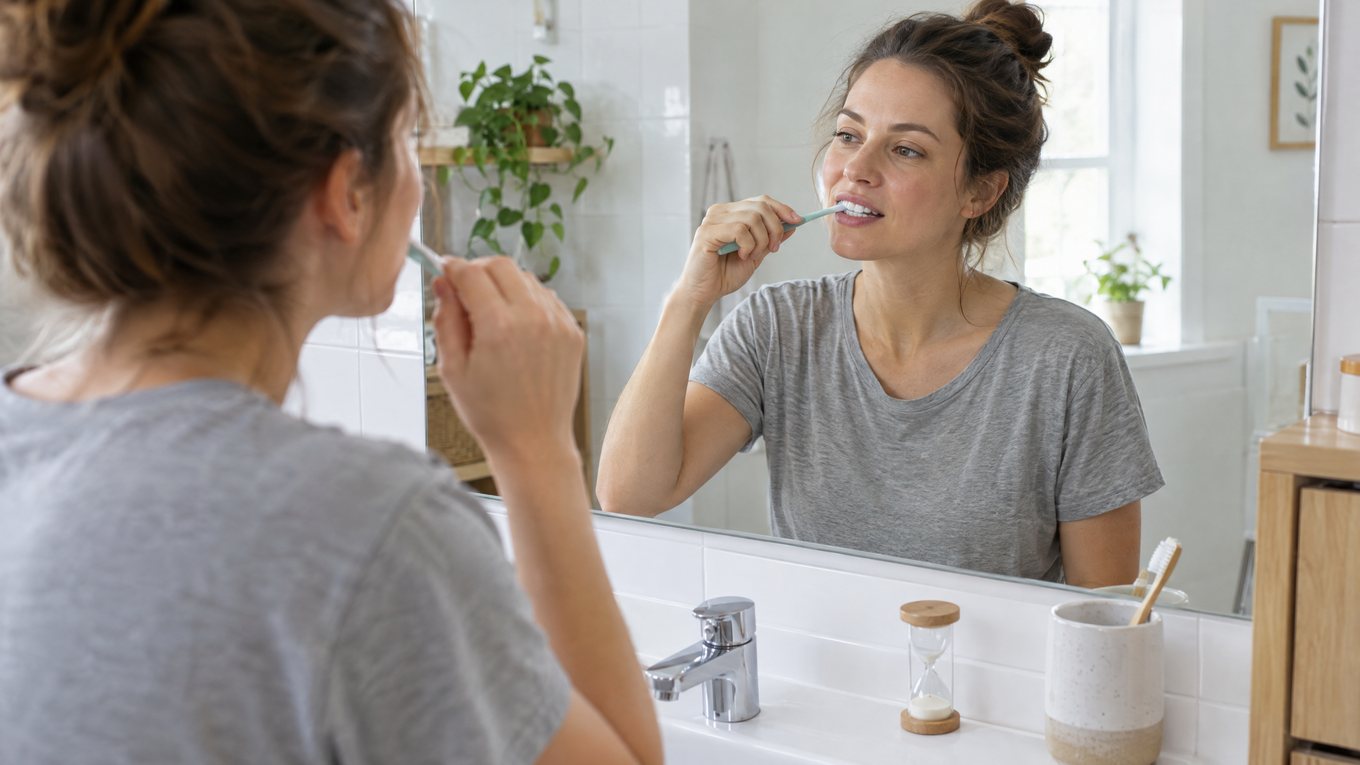
How to Brush Your Teeth Properly, Step by Step
Many dentists teach the modified Bass technique. Place the bristles where your teeth meet your gums, tilted at roughly 45 degrees. Then make short, gentle back-and-forth strokes on one or two teeth at a time. After a few strokes, sweep the brush towards the biting edge and move on.
- Squeeze a small amount of fluoride toothpaste onto a soft or medium brush.
- Start at the back of the upper teeth, on the outer surfaces.
- Angle the bristles at about 45 degrees so they slip just under the gum margin.
- Jiggle the brush in place for a few seconds without scrubbing.
- Next, sweep the bristles towards the biting edge and shift along.
- Repeat on the inner surfaces, holding the brush upright behind the front teeth.
- Clean the chewing surfaces with short strokes, then do the lower jaw.
- Finish with a light brush of the tongue, then spit without rinsing.
Why the gum line matters most
Plaque tends to gather in the narrow groove where tooth and gum meet. Learning how to brush your teeth well means aiming at that groove every time. However, research has not shown that any one technique clearly beats the others. England’s prevention toolkit therefore stresses reaching every surface in order.
How Long Should You Brush, and When?
Brush for about two minutes, twice a day, with fluoride toothpaste. Make one of those sessions the last thing you do before bed. Saliva flow drops during sleep, so fluoride left on your teeth has longer to work. The other session can come at any time, such as first thing in the morning.
Should you brush before or after breakfast?
Brushing before breakfast coats your teeth with fluoride before you eat. After a meal, we recommend waiting 20 minutes before brushing. That pause matters most after acidic food or drinks such as orange juice. Meanwhile, rinsing with plain water helps clear the acid. In short, how you brush your teeth after eating starts with a short wait.
Choosing a Toothbrush: Head Size, Bristles and Replacement
A small-headed brush with soft or medium bristles suits most adults. The small head reaches the back teeth and tucks into the gum line easily. Hard bristles remove no extra plaque but may scratch the gums. Even if you know how to brush your teeth, a hard brush undoes the effort.
Frayed bristles and the three-month rule
Our dentists advise a new brush every three months. Replace it before then if the bristles splay or fray. Similarly, swap the head on an electric brush on the same schedule. Bristles that flatten within weeks usually mean you are pressing too hard.
- Plaque
- A sticky, colourless film of bacteria that builds up on teeth and along the gum line.
- Gum line (gingival margin)
- The narrow edge where the gum meets the tooth; the main target of good brushing.
- Modified Bass technique
- A method that angles the bristles at about 45 degrees into the gum line, uses small vibrating strokes, then sweeps towards the biting edge.
- ppm fluoride
- Parts per million; the fluoride concentration printed on the toothpaste tube.
- Gum recession
- Gums pulling back to expose the root surface, sometimes linked to brushing too hard.
Is an Electric Toothbrush Worth It?
Both types clean well when you use them properly. That said, a Cochrane review found powered brushes remove slightly more plaque than manual ones. Gum inflammation fell a little more too. The authors still call the clinical importance unclear. So the right choice is the brush you will use well every day.
Compared with manual brushing, powered toothbrushes cut plaque by 11% after one to three months and by 21% after more than three months. Gingivitis fell by 6% and 11% over the same periods.
Yaacob M et al. Powered versus manual toothbrushing for oral health. Cochrane Database of Systematic Reviews, 2014.
| Feature | Manual brush | Electric brush |
|---|---|---|
| Plaque removal | Effective with good technique | Slightly more in trials (Cochrane, 2014) |
| Technique | You make every stroke | You guide the head; the motor moves |
| Timer and pressure warning | Use a clock or sand timer | Built into many models |
| Especially helpful for | Most people, travel | Limited grip, braces, low motivation |
| Replacement | Whole brush every 3 months | Brush head every 3 months |
Guide, don’t scrub: using a powered brush
With a powered brush, how to brush your teeth changes slightly. You guide the head; the motor makes the strokes. Hold it at the gum line and pause on each tooth for a few seconds. Then glide to the next tooth instead of scrubbing.
Pressure sensors and timers
Many models flash a light when you press too hard. Most also split the two minutes into 30-second sections. People with arthritis, limited grip or braces often find them easier.
Fluoride Toothpaste and the Spit-Don’t-Rinse Rule
Toothpaste is the other half of how to brush your teeth well. The NHS recommends at least 1,350 ppm fluoride for adults. England’s prevention toolkit puts the standard range at 1,350 to 1,500 ppm. After brushing, spit out the excess but do not rinse with water. Rinsing washes away the fluoride that should stay on your teeth.
How much toothpaste should children use?
Under-threes need only a smear of fluoride toothpaste. From three to six, a pea-sized blob is enough. An adult should brush for them, or supervise closely, until at least age seven. Children at higher risk of decay may benefit from professional fluoride application. Our tooth decay prevention guide for children covers more.
Scrubbing, Bleeding and Charcoal: What Your Gums Are Telling You
Receding or sore gums often point to scrubbing hard with wide sideways strokes. Extra pressure does not lift more plaque. Instead, it can push the gums back and expose the root surface. Exposed roots then twinge with cold drinks or sweet food. If that sounds familiar, our page on sensitive teeth explains the likely causes.
Pink in the sink: is bleeding normal?
Bleeding usually signals gum inflammation caused by plaque. Light bleeding is common at first, so keep brushing gently. If it persists beyond a week or two, see a dentist about bleeding gums. However, bleeding that will not stop, swelling or a loose tooth needs prompt care. Easy bruising elsewhere warrants a GP visit too.
Charcoal and baking soda
Homemade baking soda and charcoal powders contain no fluoride. Rubbed on with a firm brush, they may wear enamel and irritate the gums. A review of charcoal toothpastes found insufficient evidence for their safety and efficacy claims. For safer whitening advice, see our article on teeth whitening myths.
Beyond Two Minutes: Cleaning Between Teeth and Check-ups
Knowing how to brush your teeth is only one part of a good routine. Add daily cleaning between the teeth and regular dental check-ups. A brush cannot reach deep between teeth, so those gaps need their own tool. Once plaque hardens into tartar, it needs a professional clean.
The jobs a toothbrush cannot do
England’s prevention toolkit recommends cleaning between the teeth every day. The NHS suggests flossing before you brush; interdental brushes suit wider gaps. A light brush of the tongue reduces its coating. Meanwhile, a regular scale and polish removes the tartar your brush leaves behind. At your next visit, ask us to show you how to properly brush your teeth.
Braces, wet brushes and over-brushing: quick answers
How to brush your teeth with braces?
Is it bad to brush your teeth three times a day?
Should I wet my toothbrush before adding toothpaste?
Can you brush your teeth too much?
Toothbrush care, mouthwash and children’s brushing
How often should you change your toothbrush?
Should you use mouthwash after brushing?
Do you need to brush your tongue?
At what age can children brush on their own?
Now you know how to brush your teeth: right angle, two minutes, twice daily. To review your technique with us, get in touch with our Şişli clinic in Istanbul. Before booking, you can read about our dentists and see the full list of treatments.
Written by: Smile Group Clinical Team · Reviewed by our dentists · Last updated: 20 October 2026
Sources: NHS · Delivering better oral health (GOV.UK) · ADA MouthHealthy · Yaacob et al., Cochrane (2014) · Brooks et al., JADA (2017)