

Knowing what to eat after wisdom teeth removal makes the first week far easier. The right food protects the blood clot that seals the socket. This guide follows each stage, from smooth meals on day one to normal chewing. Then we cover drinks, cleaning after meals and warning signs that need a dentist.
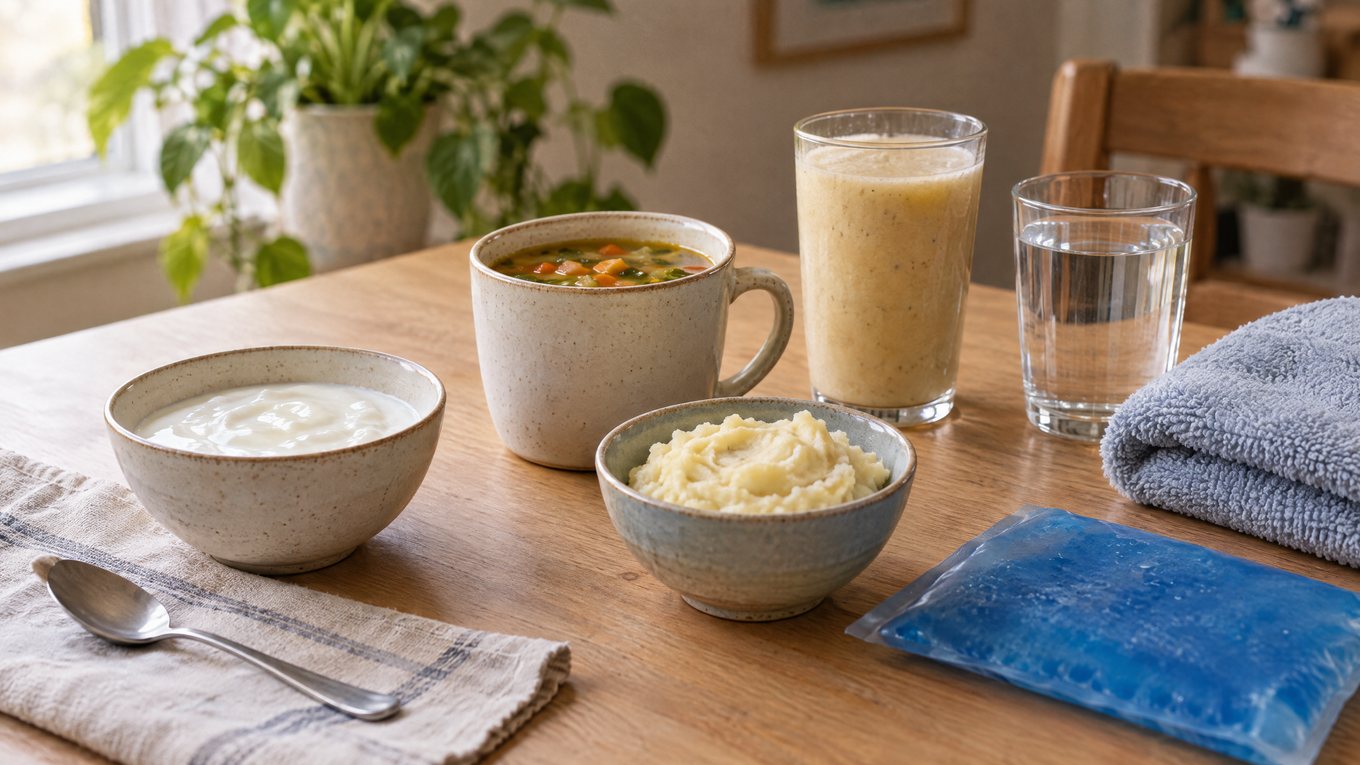
What to Eat After Wisdom Teeth Removal in the First 24 Hours
Stick to cool or lukewarm foods that need no chewing at all. Yoghurt, smooth soup, mashed potato, custard and smoothies eaten with a spoon all work well. Wait for the numbness to wear off before your first meal. Small, frequent portions feel easier than three full meals.
Why temperature matters on day one
Heat widens blood vessels, so a very hot drink can restart bleeding from the socket. Cold food, by contrast, feels soothing on a tender jaw. Let soup cool to lukewarm before you eat it.
Protect the clot while you eat
Within hours, a clot forms in the empty socket and becomes the foundation of healing. Sucking, spitting and probing the area with your tongue can dislodge it. So drink straight from a glass rather than through a straw. If you chew at all, use the opposite side of your mouth. Wisdom tooth extraction usually needs a longer soft-food phase than a routine tooth extraction.
- Blood clot
- The plug of blood that fills the socket within hours and starts the healing process.
- Dry socket (alveolar osteitis)
- Early loss of the clot, which leaves bone exposed and causes pain that builds instead of fading.
- Soft diet
- Food you can mash with a fork or swallow with little or no chewing.
- Trismus
- Temporary stiffness of the chewing muscles that limits how wide you can open your mouth.
- Fibrin
- A creamy white or yellowish layer that covers a healing socket after two or three days.
How Should Your Diet Change Day by Day?
In practice, what to eat after wisdom tooth extraction changes every few days. Most people move from smooth to soft foods by day three. Firmer food then returns gradually over one to two weeks. If chewing hurts, drop back to softer food for a day. Recovery may take longer after an impacted tooth extraction.
| Time since surgery | Texture | Good choices | Hold off on |
|---|---|---|---|
| First 24 hours | Smooth, cool or lukewarm | Yoghurt, smooth soup, mashed potato, custard, smoothies by spoon | Hot drinks, straws, alcohol |
| Days 2–3 | Very soft, almost no chewing | Scrambled eggs, porridge, hummus, mashed banana, flaked fish | Crunchy, spicy and acidic foods |
| Days 4–7 | Soft, gentle chewing on the other side | Well-cooked pasta, soft vegetables, minced meat, omelette | Nuts, seeds, crisps, popcorn |
| Week 2 | Gradually back to normal | Most everyday foods, cut into small pieces | Very hard or sharp foods near the socket |
| Any time | Pain getting worse, foul taste, fever | Stop and seek advice | Call your dentist the same day |
Days two to five: soft but filling
Once day one has passed, add foods that need only gentle pressure from your tongue. Scrambled eggs, porridge, hummus, mashed banana, avocado and flaked fish all fit this stage. Because you may eat less than usual, choose protein-rich options to keep your energy up.
The second week: back to normal, slowly
By now, well-cooked pasta, soft vegetables and minced meat usually feel fine. Introduce firmer textures one at a time and keep chewing away from the socket. Most people eat normally within two weeks, although the site may stay tender for longer. Oral wounds pass through similar stages, as our guide to dental implant healing time explains.
Eating after wisdom teeth removal on both sides
With extractions on both sides, there is no easy side to chew on. So stay with softer stages a day or two longer and cut food small.
Which Foods Should You Avoid, and Why?
Steer clear of hard, crunchy or crumbly foods for the first week or so. The NHS warns against nuts and seeds, because they can get stuck in the wound. Crisps, popcorn and crusty bread can also scratch the healing gum. Spicy and acidic foods may sting, so save curries and citrus for later.
Small grains and seeds
Rice, couscous and seeded bread go down easily but tend to collect in the socket. If a grain does get trapped, don’t dig it out with a toothpick or fingernail. Instead, rinse gently with warm salt water after the first day.
What Can You Drink While the Socket Heals?
Drinks count too when you plan what to eat after wisdom teeth removal. Water is the simplest choice, and staying hydrated supports healing. Lukewarm tea or coffee is fine, but skip very hot drinks on day one. The NHS advises against alcohol as well, because it can increase bleeding. Drink everything from a glass rather than through a straw.
Why straws are off the menu
Sucking through a straw creates negative pressure inside your mouth. That pull may loosen the clot before it firms up. Smoking and vaping work the same way. The NHS adds that smoking increases the risk of infection. Your dentist will tell you how long to avoid all three.
Rinsing After Meals: What Is the Safe Way?
For the first 24 hours, leave the socket alone and don’t rinse. From the next day, rinse gently after meals with warm salt water or prescribed mouthwash. Brush your other teeth as usual, but keep the brush away from the wound. Here is how to do it step by step.
- Wait until the day after surgery before you rinse at all.
- Stir a little salt into a glass of warm water.
- Tilt your head from side to side so the water washes over the socket.
- Let the water fall out of your mouth into the sink instead of spitting.
- Repeat after each meal and before bed for about a week.
- Brush the rest of your teeth gently, avoiding the extraction site at first.
- Use any antiseptic mouthwash exactly as your dentist instructs.
Can Food Cause Dry Socket?
Food itself is rarely the main cause of dry socket. Still, anything that disturbs the clot may raise the risk. It usually starts between days two and four, as pain builds instead of fading. A foul taste, bad breath and an empty-looking socket often come with it.
Dry socket follows 0.5–5% of routine extractions but 1–37.5% of lower wisdom tooth extractions. Between 95% and 100% of cases appear within the first week.
Kolokythas A, Olech E, Miloro M. Alveolar osteitis: a comprehensive review of concepts and controversies. International Journal of Dentistry, 2010;2010:249073.
Who is more likely to get it?
Risk is higher in smokers, after a previous dry socket and after difficult lower extractions. For example, one study cited in that review found it in 12% of half-pack-a-day smokers. Non-smokers in the same study had a rate of 2.6%. Stopping tobacco is therefore one of the most useful steps you can take.
When Should You Call Your Dentist?
Contact your dentist the same day if bleeding won’t stop despite firm pressure. Pain or swelling that worsens after day three, fever or a foul taste need attention too. Trouble swallowing or breathing is different: go to A&E immediately. These problems are uncommon, yet early treatment usually solves them quickly.
Numbness or a stiff jaw that won’t settle
Lower wisdom tooth roots can lie close to the nerves of your lip and tongue. So tell your dentist if numbness or tingling lasts into the next day. Jaw stiffness usually eases within two weeks, but see our jaw pain page if it worsens.
Common questions about food and drink
Can I eat ice cream after wisdom teeth removal?
When can I eat solid food again?
Is rice okay in the first week?
What to eat after wisdom teeth removal if you need more protein?
Healing and aftercare questions
Is it normal to taste blood the next morning?
Why does the socket look yellow after a few days?
How long will my jaw feel stiff?
What does a dentist do for dry socket?
Planning what to eat after wisdom teeth removal makes recovery noticeably smoother. If something feels wrong, contact our Istanbul clinic or book a check-up with our dentists. Travelling to Istanbul for treatment? We go through this aftercare plan with you before you leave the clinic.
Written by: Smile Group Clinical Team · Reviewed by our dentists · Last updated: 19 October 2026
Sources: Kolokythas et al., International Journal of Dentistry (2010) · NHS — Wisdom tooth removal · American Dental Association (MouthHealthy) — Wisdom teeth